East Town sits between downtown Milwaukee's core employers and the Lake Michigan shoreline, and its building stock ranges from mid-century high-rise office towers to newer mixed-use apartment buildings built into the neighborhood's walkable grid. An exchange out of East Town property often involves a high-rise floor or condominium interest, which brings structural and title questions a suburban exchange does not.
Water Street and the Downtown Office Stock
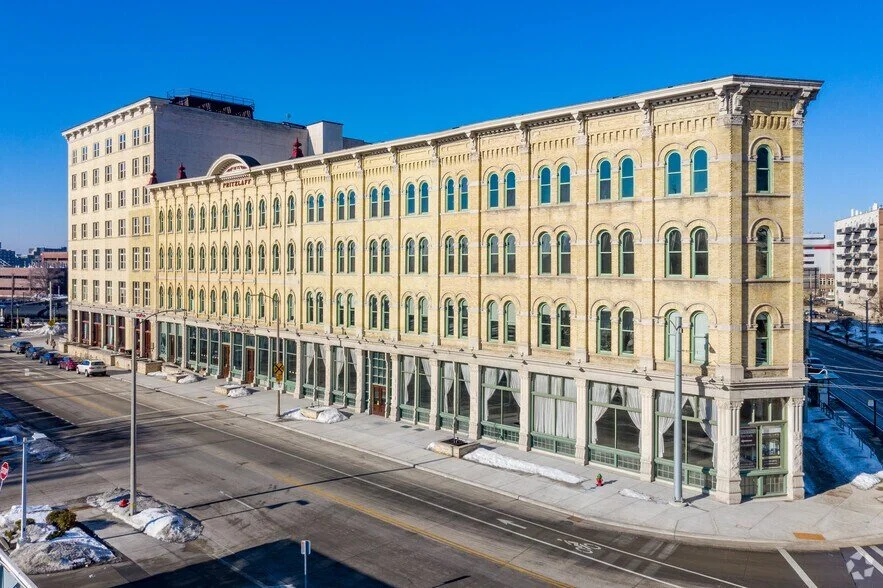
Water Street and the blocks around it hold much of East Town's office inventory, including towers built with steel moment-frame construction and curtain-wall glazing dating from several different building eras. Older towers in this corridor often have original chiller plants and single-pane or early dual-pane glazing that a buyer's engineer will flag during due diligence, while renovated floors carry newer VAV boxes and updated life-safety systems.
Mixed-use apartment buildings closer to the lakefront use more conventional wood or concrete-frame construction with retail or amenity space on the ground floor. A seller moving out of an East Town office interest should know which era of construction and mechanical system applies to the specific floor or unit being sold, since that detail affects both appraisal and the pool of comparable replacement property.
Property Types East Town Owners Typically Consider
Owners exchanging out of East Town real estate commonly evaluate a specific set of downtown and near-downtown asset types:
- high-rise or mid-rise office floors and suites
- mixed-use buildings with ground-floor retail
- apartment buildings near the lakefront
- parking structures tied to office or residential use
- condominium-interest commercial units
Each of these has different title mechanics, and an East Town seller should confirm whether the relinquished interest is a fee-simple building or a condominium unit before assuming the same structure applies to replacement candidates elsewhere in the search.
Envelope and Systems Review Before Committing to a High-Rise Floor
Before naming a high-rise office floor as replacement property, a seller's team should confirm curtain-wall sealant maintenance history, chiller plant capacity relative to leased square footage, and whether the building's life-safety systems meet current code or operate under a grandfathered provision. None of this changes like-kind eligibility, but it directly affects a lender's underwriting on the replacement purchase and should be documented before the 45-day identification window closes.
Condominium-interest office or retail units add a layer of association documents, reserve studies, and special assessment history that a suburban single-tenant building does not carry, and an East Town seller should request those records early rather than after a candidate is named on the identification list.
Financing Notes for Urban Office and Mixed-Use Conversions
Lenders active in East Town tend to underwrite older high-rise office more conservatively than newer mixed-use apartment product, particularly where chiller plants or elevator systems are original to the building. If a seller's relinquished debt is higher than what a lender will place on a replacement candidate, the gap needs to be offset with additional cash or the difference is generally treated as boot.
A seller should also ask whether a target building's elevator modernization has been completed or is still pending, since an open modernization project can affect both financing terms and the timeline a lender is willing to work within during the exchange period.
Closing Coordination for Condominium and Leasehold Interests
An East Town exchange file should clearly state whether the relinquished and replacement interests are fee-simple, condominium, or leasehold, since title companies and lenders handle each differently at closing. Sharing that detail with the qualified intermediary and any lender at the start of the 180-day exchange period reduces the chance of a late title issue delaying closing.
Because East Town's downtown stock mixes decades of construction on adjoining blocks, a seller's broker should confirm which building era a target floor or unit belongs to before it goes on the identification list, since a renovated floor in an older tower can carry very different mechanical specifications than an unrenovated floor two levels below it. That distinction affects both the appraisal a lender orders and the operating costs the investor should expect once the replacement purchase closes.
Common 1031 Exchange Questions
Can a condominium office unit in East Town qualify as 1031 replacement property?
Yes, a condominium interest in real property held for investment or business use generally qualifies as like-kind, but title and association documentation should be reviewed early since it differs from a fee-simple building purchase.
Does an older East Town high-rise's mechanical system affect exchange eligibility?
No, mechanical system age does not affect like-kind status. It does affect a lender's property condition assessment and appraised value, so confirming chiller plant capacity and life-safety code status before identification is worth the effort.
How does the three-property rule apply to an East Town office search?
An investor can identify up to three replacement candidates regardless of combined value under the three-property rule, which gives an East Town seller room to carry an office floor, a mixed-use building, and an apartment property through the 45-day window while diligence continues.
What happens if replacement financing on an East Town property falls short of the payoff debt?
If the new loan amount is lower than the debt paid off on the relinquished East Town property and the gap is not offset with additional cash, the shortfall is generally treated as boot and can create taxable gain.
Who reviews the physical condition of an East Town replacement candidate?
The qualified intermediary handles funds and documentation but does not evaluate physical condition. That review falls to the investor, their broker, and any engineer or contractor engaged to inspect envelope, mechanical, and life-safety systems before closing.