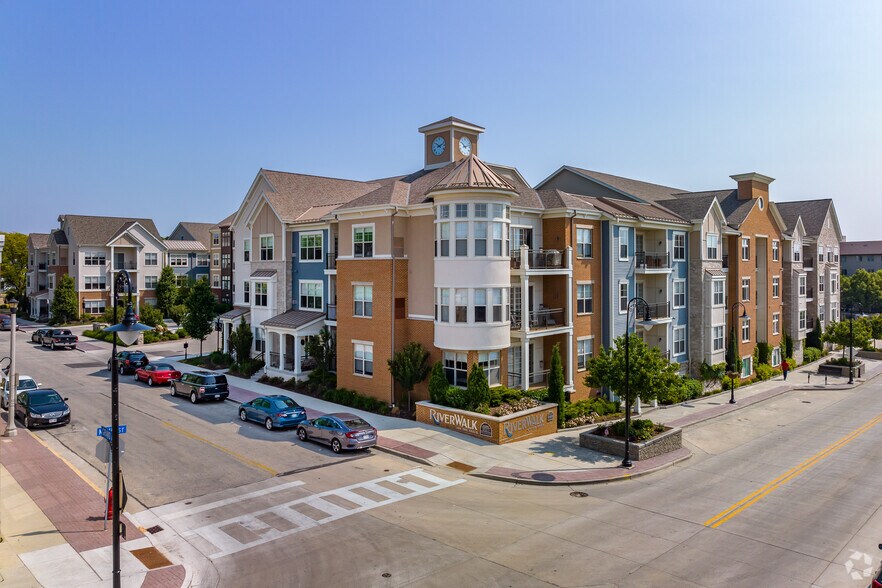
Franklin sits southwest of Milwaukee along the I-94 corridor, and its commercial stock has grown newer than much of the metro, with business parks, retail near Ballpark Commons, and multifamily built to accommodate suburban household growth. An exchange out of Franklin property usually involves comparing that newer construction against replacement candidates that may be older or built to different specifications.
The I-94 Corridor and Franklin's Business Parks
Franklin's industrial parks near the interstate use tilt-up concrete or pre-engineered metal building construction with clear heights generally taller than the older industrial stock found closer to downtown Milwaukee. Roof assemblies on this newer product are typically single-ply membrane over steel deck, which carries a longer service life than the built-up systems common in older buildings elsewhere in the metro.
Retail near Ballpark Commons and along the arterial corridors mixes newer pad sites with older strip centers, and a Franklin seller should note which category a candidate falls into, since roof age and parking-lot condition differ meaningfully between the two even within the same submarket.
Industrial and Retail Candidates Near Ballpark Commons
Owners exchanging out of Franklin property typically compare a consistent set of suburban asset types:
- pre-engineered metal industrial buildings
- tilt-up concrete distribution space
- retail pads near mixed-use development
- garden-style multifamily communities
- single-tenant net lease buildings along arterial roads
Each carries a different clear-height and dock configuration, and a Franklin seller should confirm those specifications match the intended tenant use before ranking a candidate on the identification list.
Building Specifications Worth Confirming Before Identification
Before naming an industrial building in or near Franklin as replacement property, a seller's team should confirm clear height, column bay spacing, dock door count relative to building size, and floor slab thickness. These specifications affect what tenants the building can serve and what a lender will underwrite, even though they have no bearing on whether the property qualifies as like-kind under the exchange rules.
Newer Franklin construction generally has fewer of these open questions than older stock, but a seller should still confirm warranty status on roof membranes and mechanical equipment rather than assuming newer automatically means fully documented.
Lender Preflight for Newer Suburban Industrial Assets
Lenders financing newer Franklin-area industrial and retail product generally move faster than on older urban stock, since building specifications are more standardized and easier to verify. A seller should still confirm loan sizing early, because if the replacement property's financing comes in below the debt paid off on the relinquished Franklin property, the shortfall is generally treated as boot unless offset with additional cash.
Multi-tenant Franklin business parks add a layer of underwriting a lender will want addressed before closing, including confirmation of individual tenant lease terms, whether common-area maintenance charges are current, and how much vacancy the building has carried over the trailing twelve months. A seller who assembles that leasing package before the property is named on the identification list generally moves through the lender's review faster than one who waits until after a purchase agreement is signed.
Sequencing a Franklin Search Against the 45-Day Clock
A Franklin exchange file benefits from confirming replacement building specifications and lender terms in parallel rather than sequentially, since newer suburban product often has multiple qualified buyers competing for the same building. Getting a written identification to the qualified intermediary before day forty-five, with specification and financing notes attached, keeps the 180-day closing period from being compressed by a late renegotiation.
Because Franklin's newer industrial and retail buildings tend to move quickly once listed, a seller should have a broker actively tracking new listings near Ballpark Commons and along the interstate frontage well before the relinquished property closes, rather than starting the search from scratch once the 45-day clock begins. A candidate that looks strong on paper can go under contract with another buyer within days in this corridor, so having a backup candidate's specifications already gathered protects the identification list from a late scramble.
Common 1031 Exchange Questions
Does newer construction in Franklin make a 1031 exchange faster to close?
It can help, since standardized specifications and current mechanical warranties reduce the number of open diligence items a lender needs resolved. The 45-day identification and 180-day closing deadlines still apply regardless of building age.
Can a Franklin industrial owner exchange into retail near Ballpark Commons?
Yes, industrial and retail real property held for investment or business use are both like-kind to one another under the exchange rules. Financing terms and building specifications differ between the two, so diligence should reflect the new asset type.
What building specifications matter most for a Franklin industrial replacement?
Clear height, column bay spacing, dock door count, and floor slab thickness are the specifications that most directly affect tenant fit and lender underwriting, and confirming them before identification avoids surprises during the 180-day exchange period.
How many replacement properties can a Franklin seller name?
Up to three under the three-property rule regardless of value, or more if the combined value of all identified candidates stays within 200 percent of the relinquished property's sale price under the 200 percent rule.
What happens if a Franklin seller receives more cash than needed for the replacement purchase?
Any cash not reinvested is generally treated as boot and can trigger taxable gain, even when the rest of the exchange qualifies. Reviewing the numbers with a qualified intermediary and tax advisor before closing helps size the purchase correctly.