Greenfield sits southwest of Milwaukee, built along Layton Avenue and 108th Street with a mix of strip retail, medical office, and service commercial buildings serving its established residential base. An exchange out of Greenfield property usually centers on strip retail that has been through at least one round of roof and parking-lot repair, which shapes how it compares against newer replacement candidates.
Layton Avenue and Greenfield's Strip Retail Stock
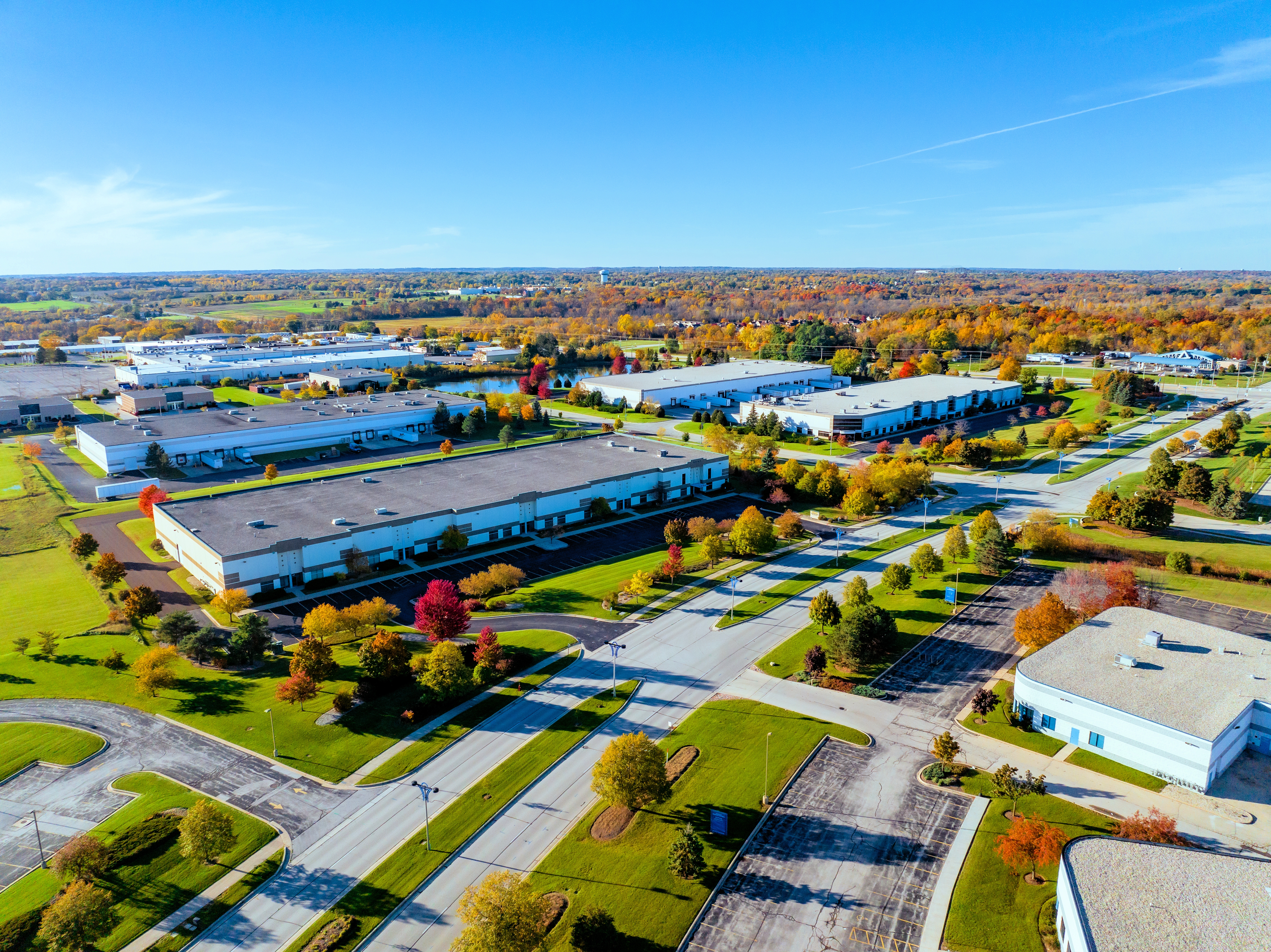
Most of Greenfield's commercial buildings along Layton Avenue and 108th Street were built between the 1960s and 1980s, with steel bar-joist roof framing and built-up or modified bitumen roofing that has typically been recoated at least once. Parking lots from this era often show base failure at the edges before the surface itself needs replacement, which is a detail worth documenting before a Greenfield property enters an identification list.
Medical and professional office in Greenfield tends to be lower-rise, built to accommodate walk-in traffic and surface parking, with mechanical systems sized for daytime-only occupancy. A seller comparing that stock against a newer suburban medical building elsewhere in the search should expect a real difference in HVAC zoning and equipment age.
Property Types Common to a Greenfield Search
Owners exchanging out of Greenfield property typically evaluate a consistent group of candidates:
- strip retail centers with surface parking
- medical and professional office buildings
- service commercial buildings with drive lanes
- garden-style apartment communities
- single-tenant retail on arterial frontage
A Greenfield seller should weigh roof and parking-lot condition against rent roll strength for each of these, since older strip retail in the corridor can show strong occupancy while still carrying deferred capital needs.
Roof and Parking-Lot Condition on Older Strip Centers
Before naming a Greenfield strip center as relinquished or replacement property, a seller's team should confirm roof membrane type and last recover date, parking-lot base condition versus surface-only patching, and whether any tenant improvement allowances are still being amortized against current leases. None of this affects like-kind eligibility, but it directly shapes appraisal and a lender's underwriting on the replacement side.
Medical office candidates carry a separate set of questions around plumbing capacity for exam rooms and whether HVAC zoning supports multiple tenant suites, which a Greenfield seller should confirm before assuming a medical building will finance as easily as a straightforward retail strip. A seller should also confirm whether any suite has been built out with specialized fixtures that a future tenant may not want, since that affects re-leasing cost.
Financing Considerations for Service Retail and Flex Space
Lenders financing Greenfield-area strip retail generally look closely at anchor or largest-tenant lease terms alongside physical condition, since the two together determine income durability. A seller replacing debt from a Greenfield relinquished property should confirm the target financing terms early, because any gap between the payoff amount and the new loan is generally treated as boot unless offset with additional cash.
Service commercial buildings with drive lanes, such as those built for quick-service or automotive tenants, carry their own financing quirks, since a lender will want to confirm the drive lane and canopy structure were built to code and that any underground fuel or fluid storage has been properly closed or removed before the property is named as replacement candidate.
Building the Identification File for a Greenfield Candidate
A Greenfield exchange file should pair the standard identification language with a short summary of roof age, parking-lot condition, and tenant lease terms for each candidate, so the qualified intermediary and any lender are working from the same physical record rather than relying on the neighborhood name to imply a level of quality that varies block to block.
Because Layton Avenue and 108th Street carry a long stretch of similar-looking strip retail, a seller and their broker should walk each candidate rather than screening purely on rent roll and asking price, since two centers with comparable numbers can carry very different roof and parking-lot repair timelines. Recording that visual assessment in the exchange file, alongside any contractor estimates gathered during the walk-through, gives the lender a clearer basis for underwriting once a candidate moves toward contract.
Common 1031 Exchange Questions
Does an older roof on a Greenfield strip center affect 1031 eligibility?
No, roof condition does not affect whether real property qualifies as like-kind. It does affect appraisal and financing, so documenting membrane age and recover history before identification is worth the time.
Can a Greenfield strip retail owner exchange into medical office?
Yes, retail and medical office are both real property held for investment or business use and are like-kind to one another under the exchange rules, though the two asset types differ in mechanical specifications and financing terms.
What is the three-property rule and how does it apply in Greenfield?
The three-property rule lets an investor identify up to three replacement candidates regardless of combined value, which gives a Greenfield seller room to carry a retail center, a medical building, and a service commercial property through the 45-day window at the same time.
How does a tenant improvement allowance affect a Greenfield exchange?
An unamortized tenant improvement allowance does not affect like-kind status, but it reduces net operating income and should be disclosed to a buyer's lender, since it affects both appraisal and the replacement property's income projection.
What is the deadline to identify replacement property after a Greenfield sale?
An investor has 45 days from closing on the relinquished Greenfield property to submit a written identification to the qualified intermediary, with 180 days total to close on the replacement purchase.