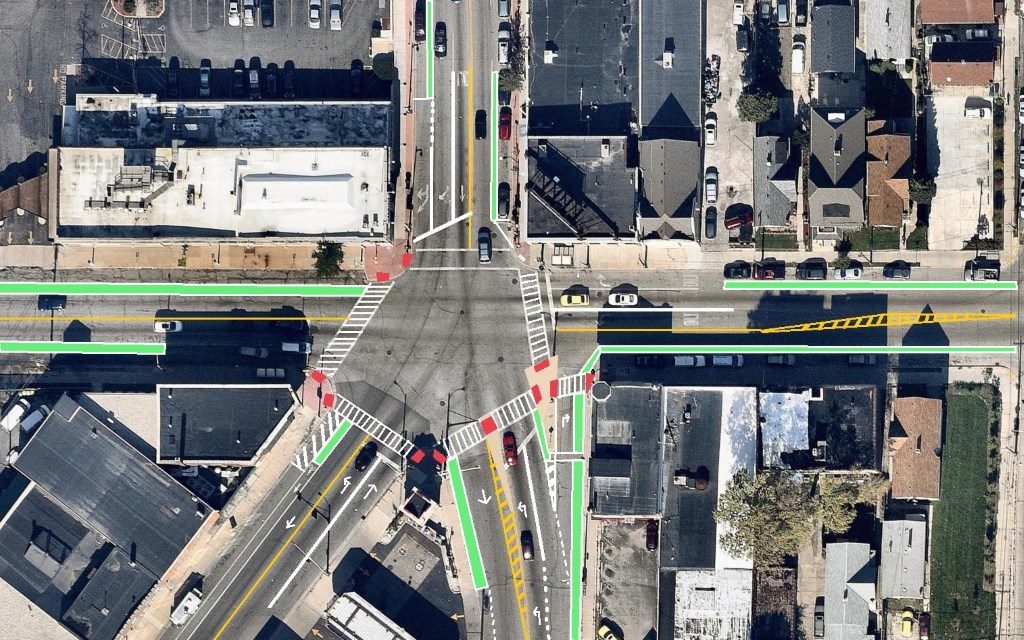
Whitefish Bay's commercial inventory is small by design, a handful of blocks along Silver Spring Drive serving one of the most consistently high-occupancy residential communities on the north shore, which means a replacement search here usually has to look beyond the village's own limited stock.
A Small, Owner-Occupied Commercial Core
The retail and office buildings along Silver Spring Drive are mostly one and two stories, built from the 1920s through the 1950s with masonry construction and simple flat or low-slope roofs, and a meaningful share of them are owner-occupied rather than held as pure investment property, which limits how many genuinely tradable buildings exist in the village at any given time.
Because the community is almost entirely built out, with little vacant land left for new commercial construction, existing buildings rarely turn over, and the ones that do tend to need individual roof, electrical, and plumbing review since deferred maintenance is common in small owner-occupied storefronts that have not changed hands in decades.
Because so few buildings change hands here, pricing data on recent comparable sales can be thin, and we rely more heavily on nearby lakefront community comparables than we would in a market with more frequent turnover, which investors should factor into their expectations for how precisely a Whitefish Bay building can be valued.
What Little Inventory Exists
The short list of commercial building types actually available in Whitefish Bay looks like this.
- small owner-occupied retail along Silver Spring Drive
- professional office in converted residential structures
- small multifamily buildings scattered through residential blocks
- limited neighborhood service commercial
- occasional mixed-use with upper-floor apartments
We also flag whether a candidate building's zoning classification still permits its historical commercial use as of right, since a village this built-out sometimes tightens zoning over time, and a legal nonconforming use designation can affect both financing and what an investor is allowed to do with the building later.
Why a Local-Only Search Usually Falls Short
Given how little commercial inventory turns over here, we tell investors early that a Whitefish Bay-only identification list is unlikely to produce enough qualifying candidates before the 45-day window closes, and that the search almost always needs to extend into neighboring lakefront communities to have a workable shortlist.
When a Whitefish Bay building is available, we still confirm roof age, electrical service capacity, and plumbing condition individually, since these small buildings do not carry the kind of ongoing capital reserve documentation a larger commercial landlord would maintain.
We also confirm whether an owner-occupied seller has any record of prior insurance claims on the building, since claim history can affect what a new policy costs even when current physical condition looks acceptable.
Coordinating a Search That Extends Beyond the Village
Because inventory here is so limited, we keep the qualified intermediary, lender, and tax advisor aware from the start that the identification list will likely include properties outside Whitefish Bay itself, so the written identification does not name candidates that turn out to be unavailable once the 45-day window is underway.
We also confirm early whether the investor's lender is comfortable financing a small, owner-user-adjacent commercial building, since some lenders prefer larger investment-grade assets and may take longer to underwrite a property this size than a specialist community lender would.
Why High Owner-Occupancy Changes the Calculation
A commercial building in Whitefish Bay that has been owner-occupied for decades often needs more basic systems review than a comparable investment-grade building elsewhere, since the seller may not have maintained the kind of documentation a pure investment property owner typically keeps for lenders and insurers.
Investors should also expect that a Whitefish Bay building, once available, may attract more interest from owner-user buyers than from typical investment buyers, which can affect both pricing and how quickly a listed property actually closes. That owner-user interest can push pricing above what a pure investment buyer would otherwise pay, a dynamic that works in the seller's favor here more consistently than in submarkets with a larger pool of pure investment buyers competing for the same short list of available buildings.
Common 1031 Exchange Questions
Is there enough commercial inventory in Whitefish Bay to build a full identification list?
Usually not on its own. We recommend extending the search into neighboring lakefront communities early rather than waiting to discover the shortage inside the 45-day window.
Does an owner-occupied building here need different diligence than an investment property?
Often yes, since the seller may not have kept the kind of documentation a lender expects, so we confirm roof, electrical, and plumbing condition individually rather than relying on existing records.
Why is so little commercial property available in Whitefish Bay?
The village is almost entirely built out with little vacant land, and a meaningful share of existing buildings are owner-occupied rather than held as investment property, which limits turnover.
Can a small mixed-use building here work as a passive replacement property?
It can, though buyers should expect more hands-on management than a larger investment-grade building elsewhere, given the small scale and older systems typical of this stock.
Who should be told early that the search may extend outside the village?
Your qualified intermediary and tax advisor, so the written identification reflects a realistic geographic search rather than being limited to properties that may not be available, and the lender is prepared for candidates outside the immediate neighborhood.